
Spotlight: The photographs of Captain Scott
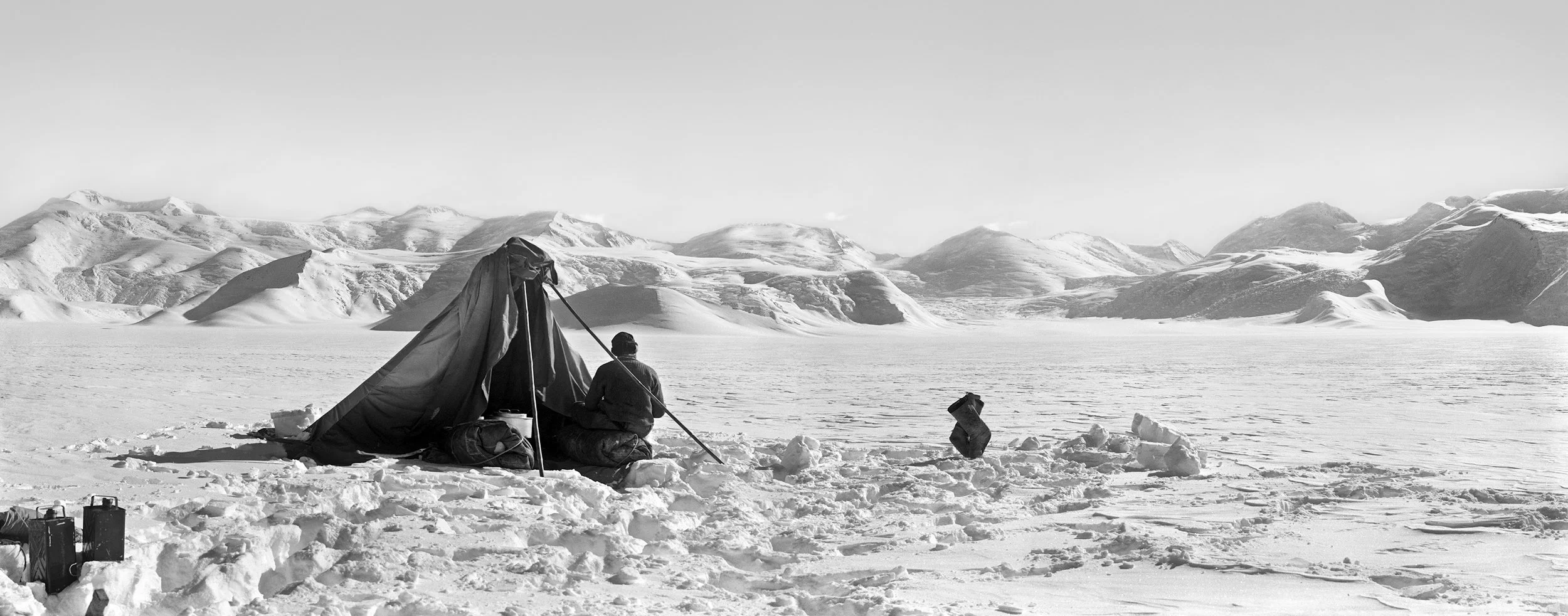
Dr. Edward Wilson sketching, Mount Elizabeth to Mount Fox, Pole Journey, Beardmore Glacier, lunch camp. 13 December 1911
Treasures of Antarctic Photography
Step through the doors of the Polar Museum in Cambridge and you will encounter display cases filled with a treasure trove of artefacts drawn from the stirring - and often tragic - history of polar exploration. These range from skis and sledges to reindeer-fur sleeping bags, sealskin clothing, Primus stoves, food rations, navigational instruments, and photographic cameras. There is, however, one category of artefact deemed too precious to display or expose to light.
Stored under lock and key in temperature-controlled storerooms on the first floor of the Scott Polar Research Institute, home to the Polar Museum, are collections of original glass-plate and celluloid negatives dating from the earliest days of exploration photography. These include negatives exposed by Frank Hurley during Ernest Shackleton’s Endurance expedition of 1914–17, as well as those made by Herbert Ponting during Captain Robert Falcon Scott’s Terra Nova Antarctic expedition of 1910–13. It was during this latter expedition that Scott and his four companions tragically perished on their return journey from the South Pole.
Ever since their re-emergence and acquisition by the Scott Polar Research Institute in 2014, the Institute’s photographic archive also includes the 113 negatives exposed by Scott himself. Smaller in format and taken with a foldable Kodak Vest Pocket camera, these images document activities and landscapes around the expedition’s wintering hut at Cape Evans, as well as Scott’s final trek towards the Pole.
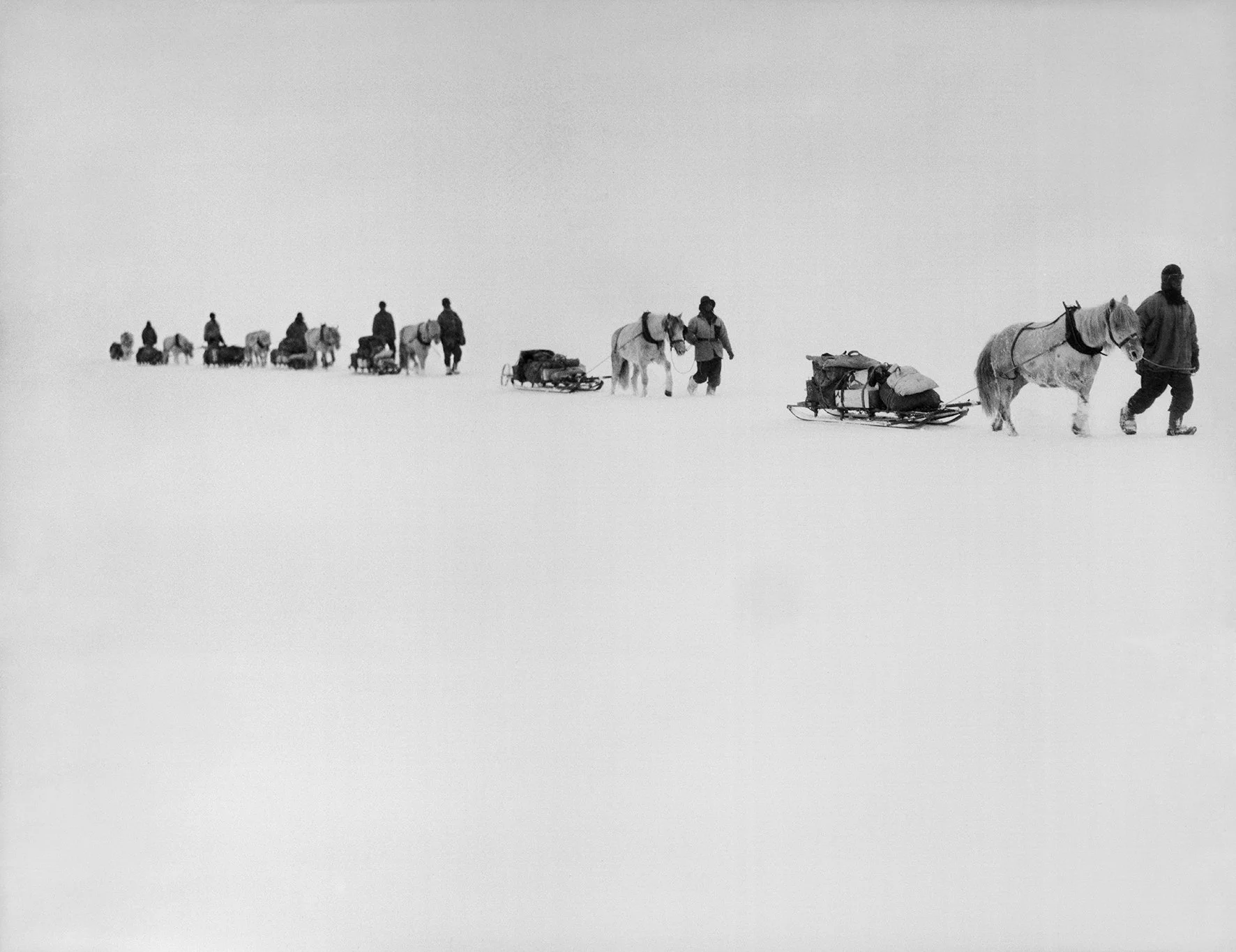
Ponies on the March, Pole Journey: Great Ice Barrier, 2 December 1911
Preserving Captain Scott’s Visual Legacy
For Salto Ulbeek, it has been a privilege to work with the Scott Polar Research Institute and publish prints and portfolios drawn from these rare and uniquely significant visual records of early Antarctic exploration. Perhaps especially those exposed by Scott himself. In addition to his diary - recovered beside his dead body and now widely regarded as a masterpiece of polar literature - Scott’s negatives take us to the very heart of what is now known as the ‘Heroic Age’. Thought lost since the 1930s, their existence was previously known only through two small sets of postcard-sized (10 × 8 inch) prints made by their custodian, Herbert Ponting, shortly before his death.
The platinum–palladium prints and portfolio produced by Salto Ulbeek from Scott’s original negatives thus mark the first time these images have been printed and presented to their full potential. Enlarged to a size that allows close visual engagement without loss of sharpness or tonal subtlety, Scott’s photographs invite the viewer to fully appreciate - and immerse themselves in - one of the most compelling stories in the history of exploration.
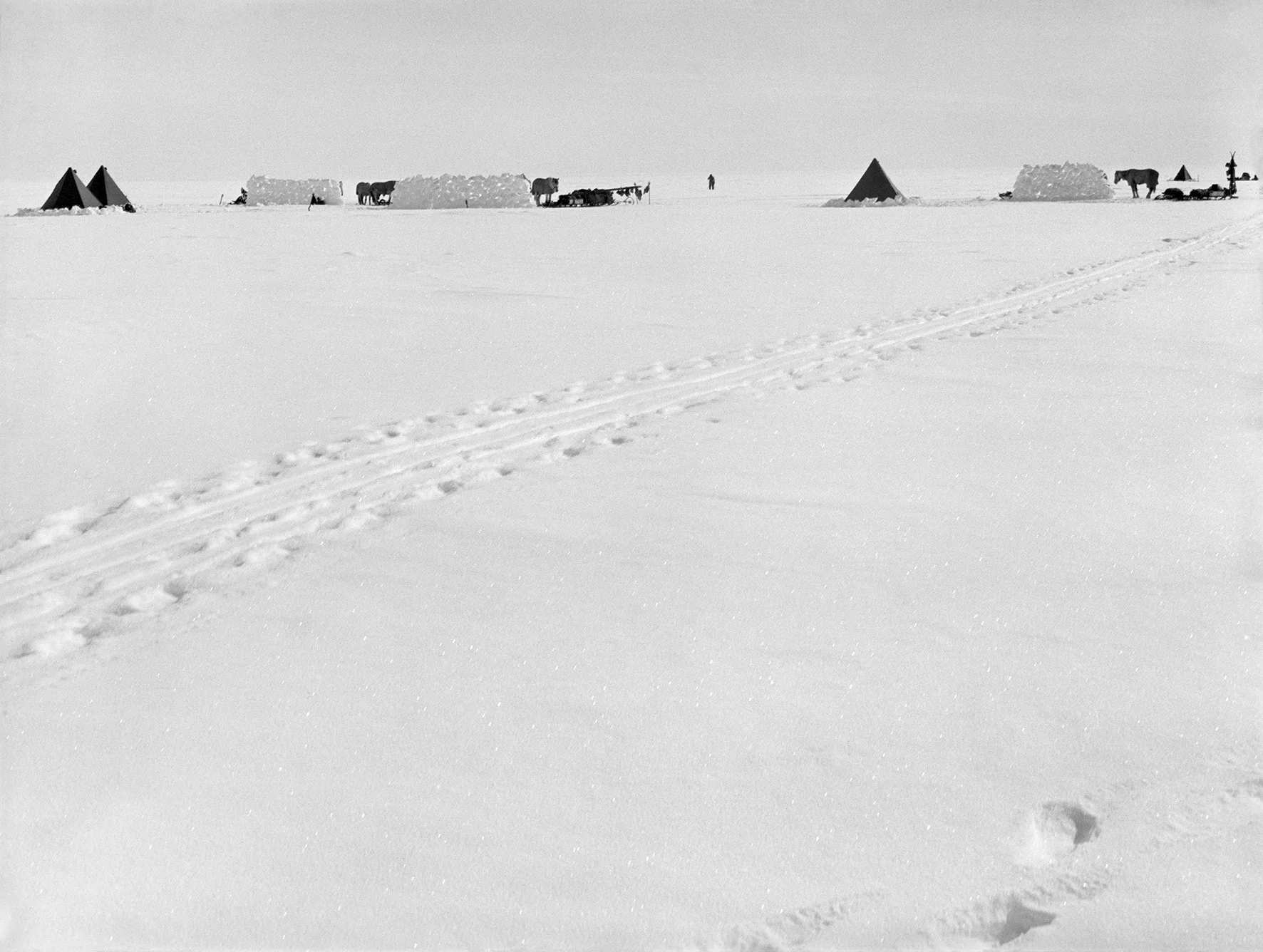
Unidentified Pony Camp, Pole Journey: Great Ice Barrier, November 1911
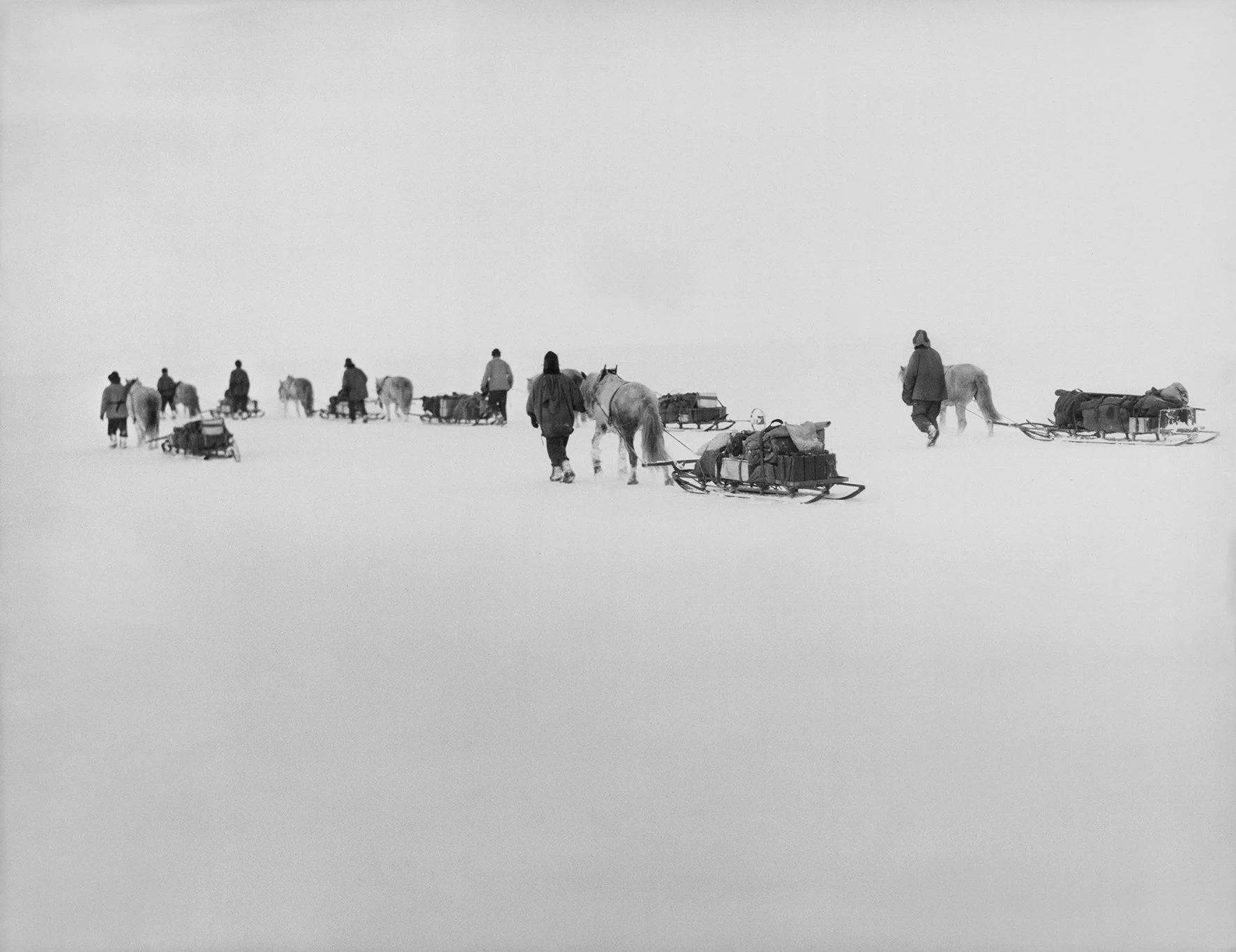
Ponies on the march, Pole Journey: Great Ice Barrier, 2 December 1911
Enlightened Amateur
Having learned the fundamentals of photographic technique and composition from Herbert Ponting, Scott might best be described as an enlightened amateur. His limited training nevertheless resulted in photographs that - despite or, perhaps, because of their shortcomings - offer a uniquely intimate window onto his journey to the South Pole.
Whether viewed individually or as a group, these photographs transport us far inland, into regions beyond the reach of Ponting, whose fitness and cumbersome equipment prevented him from undertaking longer sledging journeys. Infused with a quiet simplicity and an unencumbered aesthetic that contrasts with the grand compositions of his photographic mentor, they capture both vulnerability and tenacity: the monotony of the Ice Barrier and the thrill of discovery, the weight of the sledges and the companionship of the ponies.
Scott’s photographs also provide insight into the environmental, logistical, and human circumstances that enabled the expedition’s achievements, while foreshadowing the conditions that led to its failure. In contrast to the assurance of his writing, which forges a coherent historical narrative, the photographs speak instead of doubt, improvisation, and uncertainty. What they ultimately convey - tinged with a quiet melancholy - is not heroism, but the singular predicament of a small group of explorers immersed in an environment as hostile as it is otherworldly.
Jean de Pomereu, Jan ‘26
*Salto Ulbeek will be exhibiting from their collection of Captain Scott platinum palladium prints at Unseen Photo in Rotterdam, March 27-29th 2026
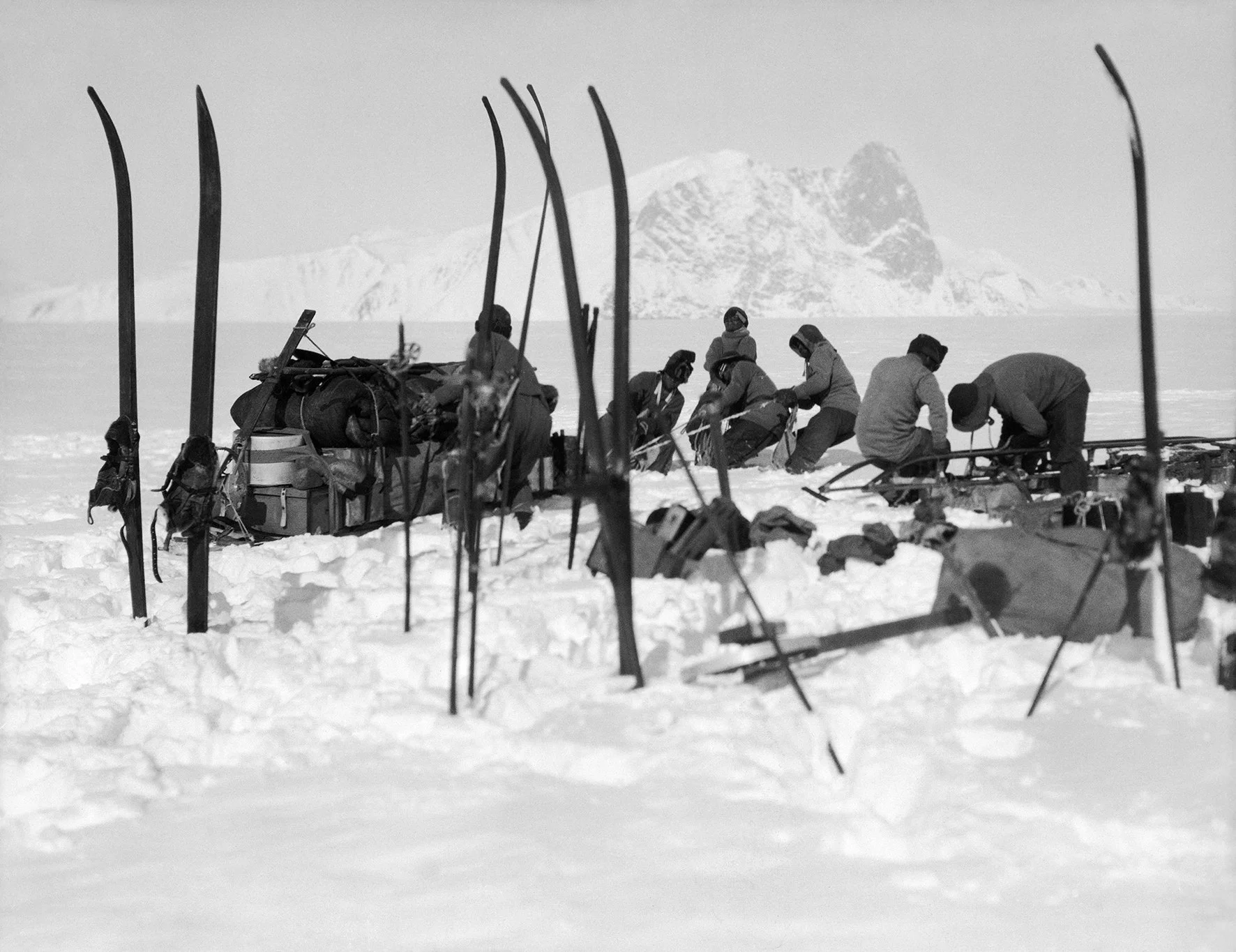
Foundering in soft snow: Bowers sledge, Wilson pushing; Oates and PO Evans repairing, Pole Journey: Beardmore Glacier, 13 December 1911, Lunch camp
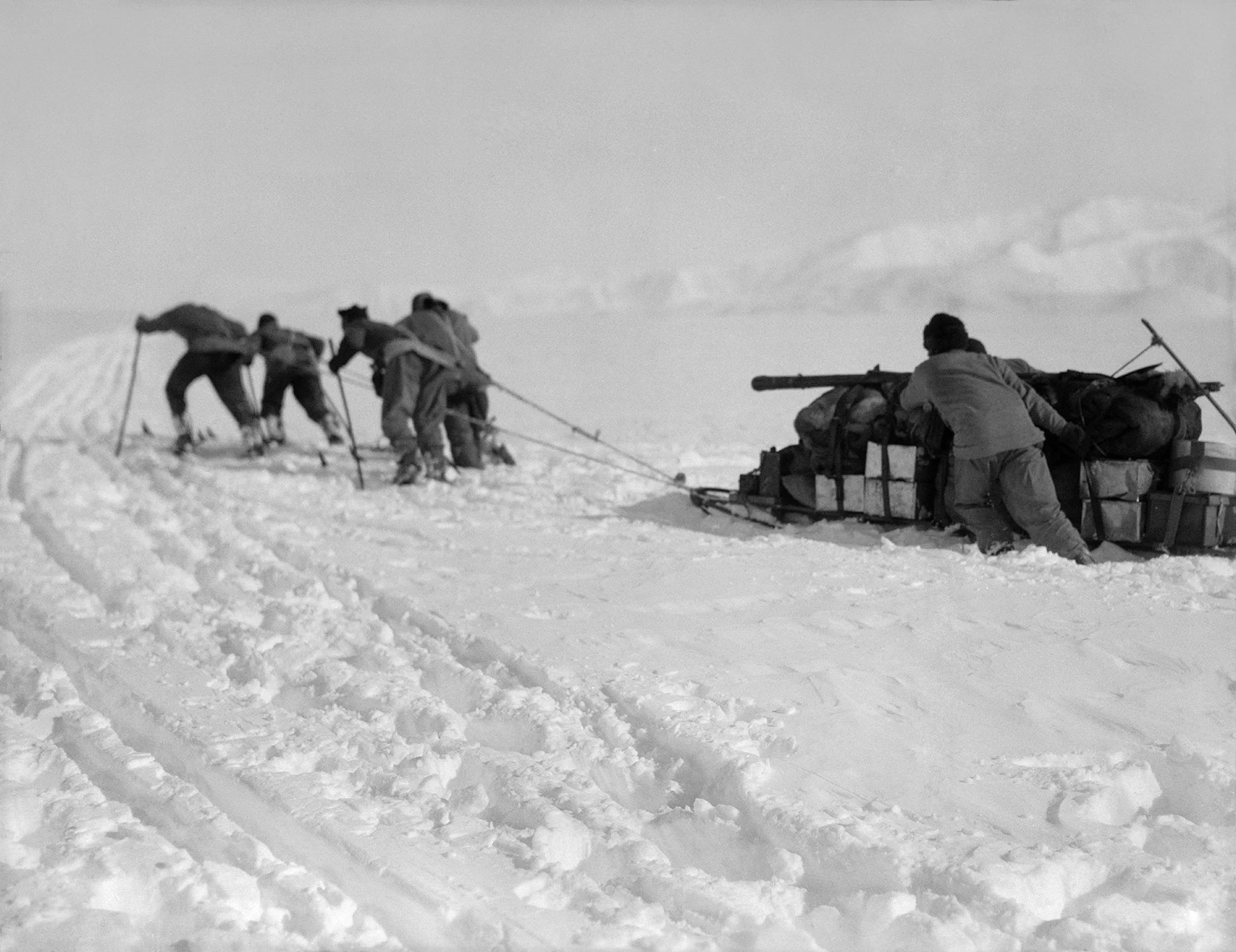
Foundering in soft snow: Pulling: (l-r) Cherry-Garrard; Bowers; Keohane; and Crean. Pushing: Captain Scott (front) and Dr. Wilson (behind), Pole Journey: Beardmore Glacier, 13 December 1911, Lunch camp
