
The autochromes of the 1921-22 Shackleton-Rowett ‘Quest’ expedition
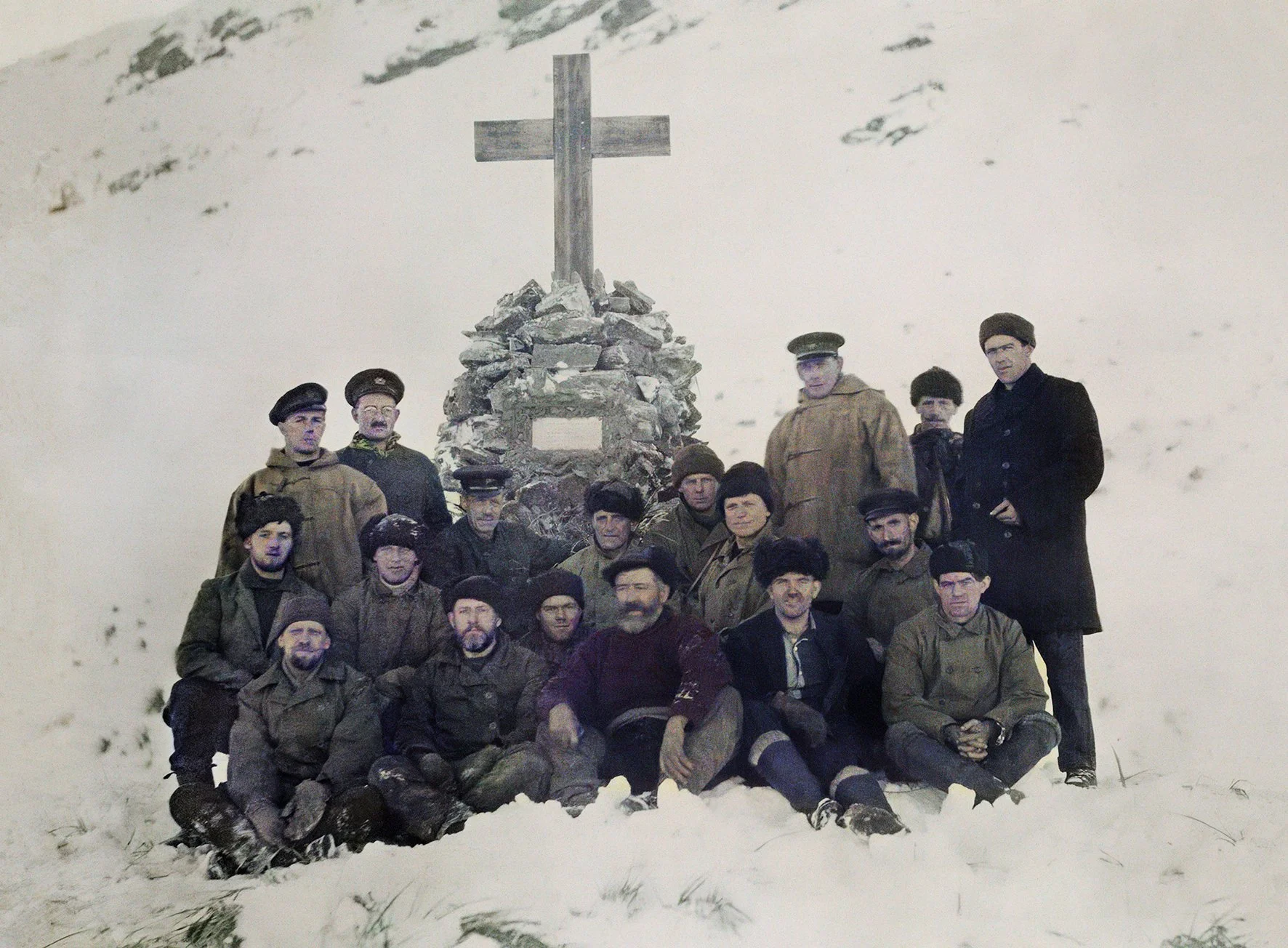
Crew of ‘Quest’ at Shackleton’s cairn, Hope Point, King Edward Cove, South Georgia, 5 May 1922 - photographer: George Wilkins
One of Salto Ulbeek's most significant recent collaborations has been with Jan Chojecki, grandson of John Quiller Rowett, the businessman who financed Ernest Shackleton's final expedition aboard the Quest in 1921–22. We were introduced to Jan by a mutual friend in 2023 and what began as a conversation about family history has grown into one of the most rewarding archival projects we have undertaken.
Among Jan's family possessions was a series of colour autochromes taken during the Quest expedition by George Wilkins, the expedition's naturalist and official photographer. These images are remarkable for several reasons: they form the first comprehensive collection of colour photographs of South Georgia and Antarctica from that era, they carry deep historical weight as visual documents from the voyage on which Shackleton died and they are simply beautiful, luminous objects in their own right.
What is an autochrome?
The autochrome process, patented by the Lumière brothers in France in 1903 and commercially available from 1907, was the first practical and widely used method of colour photography. Rather than relying on separate colour dyes applied after the fact, the process embedded colour directly into the photographic plate itself. Microscopic grains of potato starch were dyed red-orange, green and violet, then spread in a random, extraordinarily fine layer across a glass plate and coated with a black-and-white photographic emulsion. When light passed through this mosaic of coloured grains on its way to the emulsion, it was filtered into its constituent colours, and upon development and reversal processing, a positive colour transparency emerged — one that had to be viewed by transmitted light, typically held up to a window or placed in a special light-box.
The results have a soft, granular, almost pointillist quality quite unlike modern colour photography, and this texture is part of what makes autochromes so distinctive and prized today. The process was technically demanding, required long exposures and produced a single unique plate rather than a reproducible negative — which makes surviving examples, particularly from remote and historically important expeditions, exceptionally rare. That George Wilkins carried the equipment and expertise to make autochromes under the brutal conditions of a Southern Ocean expedition speaks to both his skill and his foresight in documenting the voyage in colour at a time when almost all expedition photography was still monochrome.
A current living connection to the ‘Quest’ - July 2026
The story of these plates continues to unfold in a rather extraordinary way. Jan is currently (14th July 2026) aboard the research vessel Atlantis, working with the Royal Canadian Geographical Society and the Woods Hole Oceanographic Institution. A few days ago they were in the Labrador Sea at the last resting place of the Quest itself. Atlantis is now traveling north to a site off Greenland which holds the wreck of Terra Nova, Captain Scott's ship from his ill-fated 1910–13 expedition to Antarctica and the South Pole. Using a remote-operated vehicle, Alvin, the expedition team aims to explore both wreck sites and produce detailed digital twins — virtual replicas that will allow researchers to study the vessels for years to come without disturbing them. At the Quest site, Jan was on board Alvin and spent about two and a half hours at a maximum depth of 387m inspecting the wreck. Alexandra Pope, editor-in-chief of Canadian Geographic, was with Jan on the dive and wrote in her Instagram post: “And Quest…oh, Quest. She is more garden than ship now. Even the nets and floats wrapped around her stern have become home to bouquets of pale-yellow soft corals and pink anemones, and fish hunt in dark rooms where history was mapped out.”
It is a striking thought that, a century after Wilkins made these autochromes on the Quest's decks, the ship itself is now being rediscovered and digitally preserved by the descendant of the man who financed the voyage.
You can follow Jan and the expedition’s current progress, including its survey of the Terra Nova, at @shackletonrowett and @rcgs_sgrc.
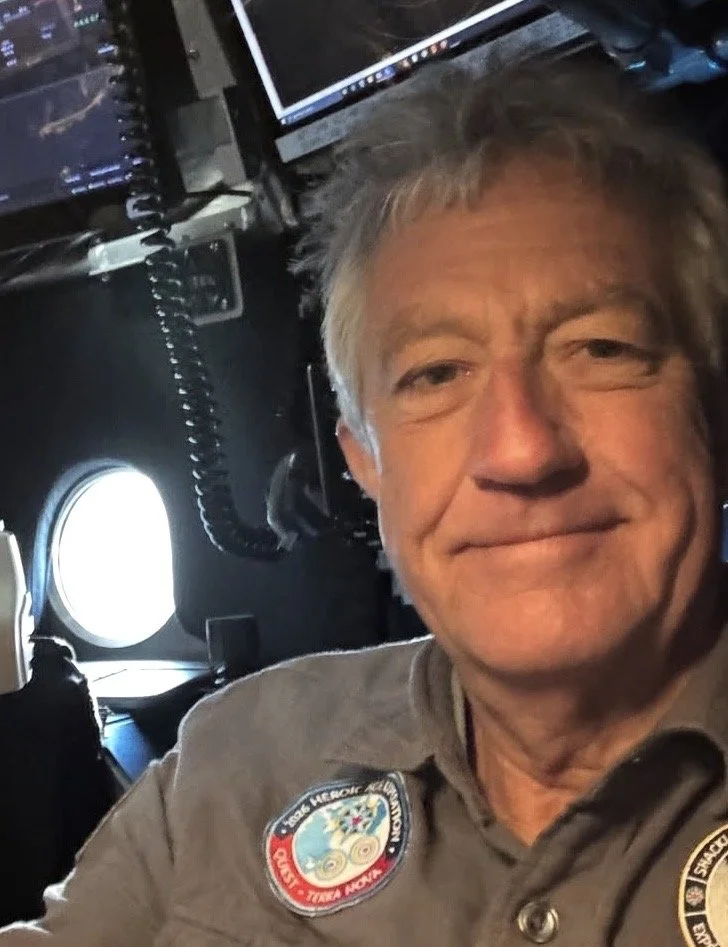
Jan Chojecki on board Alvin, inspecting the wreck of the ‘Quest’
The ‘Quest’ print collection
The complete collection of Quest autochromes has been scanned and painstakingly restored from the original glass plates, and is available from Salto Ulbeek together with a 48-page catalogue detailing how, when, and where each photograph was taken. It is a rare opportunity to see the Shackleton era — so often pictured only in black and white — rendered in the soft colour of one of photography's earliest colour processes. The collection can be viewed in the Publications section of our website.
